Jacksonville, Duval County and nearby
Pressure Washing in Jacksonville, FL
Exterior cleaning for Jacksonville homes and businesses, matched to the surface. Higher pressure where bare concrete can take it, low pressure where siding and roofs need it.
- Free estimates, no obligation
- Right pressure for each surface
- Homes and commercial property
Free estimates, no obligation
Surface-safe methods
Same-day response
Residential and commercial
How we work
Cleaning matched to the surface, not one pressure for everything
The right method for the material
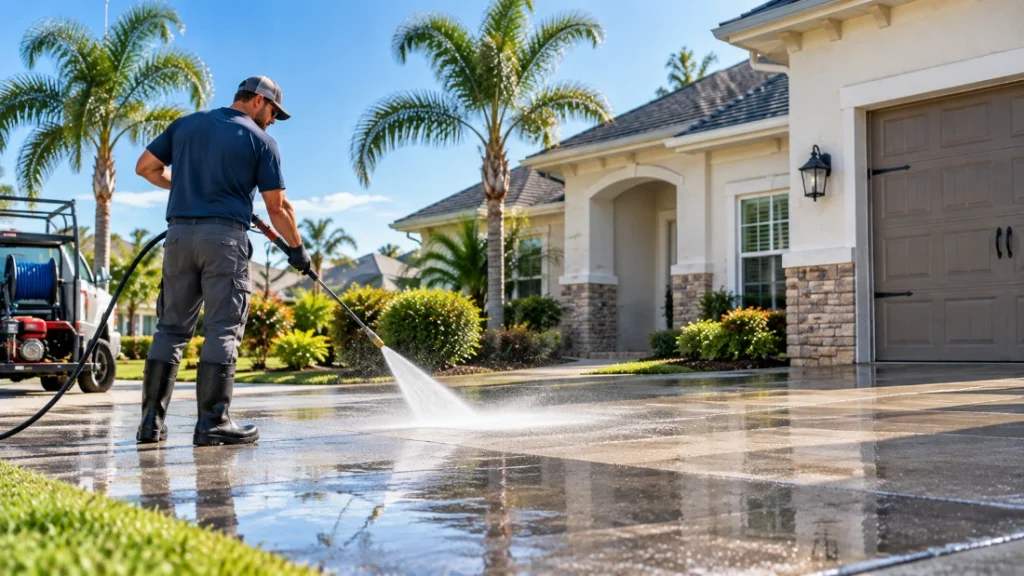
Bare concrete takes higher pressure. Pavers take it with a wide spray at a low angle so the joint sand stays in. Vinyl, stucco, painted wood and shingle need low pressure. We pick the method from the surface, not from habit.
Residential and commercial
Homes, multi family property, storefronts and commercial flatwork. The pricing basis differs, and we explain which applies to you.
Free estimates
Describe the property and the surfaces. You get a scope and price before anything is booked.
Jacksonville and nearby
Duval County, plus Clay, Nassau and St. Johns communities within reach. The full list is further down.
Services
What we clean
Each surface gets its own method. Pick the one you are dealing with to see how we approach it and what drives the price.
House washing
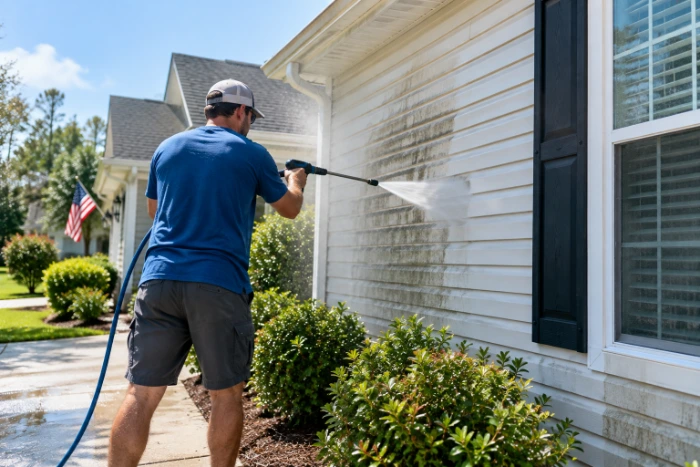
Siding, soffit, fascia and trim. Low pressure with a cleaning solution, because siding does not need force and force is what damages it.
How house washing works
Roof cleaning
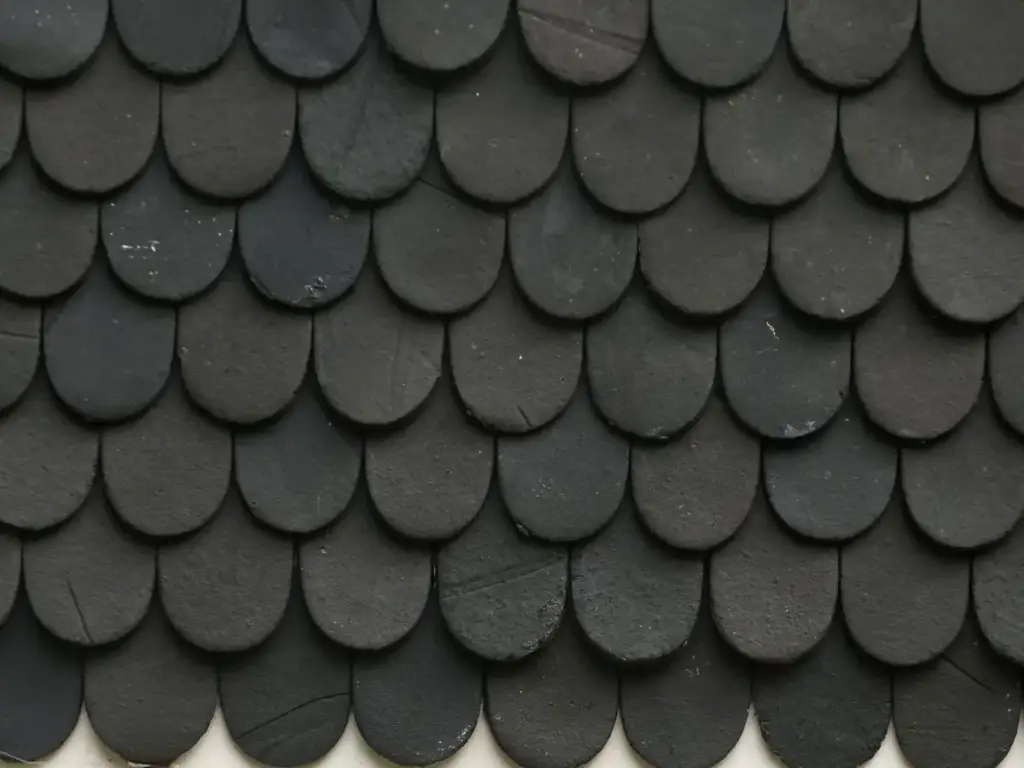
Black streaking on asphalt shingle is usually an algae called Gloeocapsa magma. It comes off with a low pressure treatment, never a pressure washer.
How roof cleaning works
Gutter cleaning
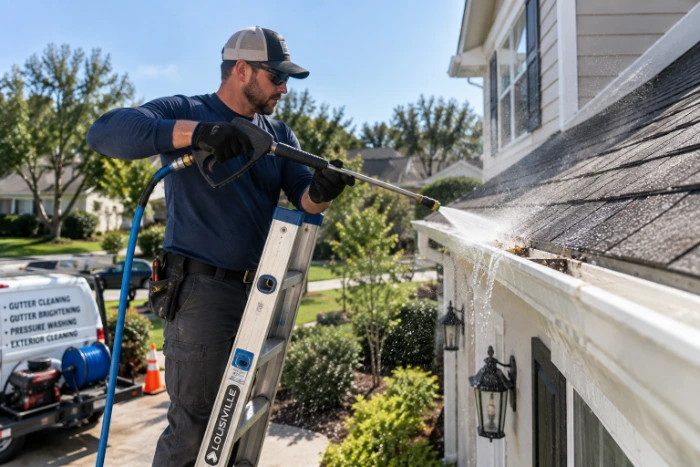
Clearing the channel, and brightening the outside face where staining has set in. Two different jobs, priced as two lines.
How gutter cleaning works
Driveways and concrete
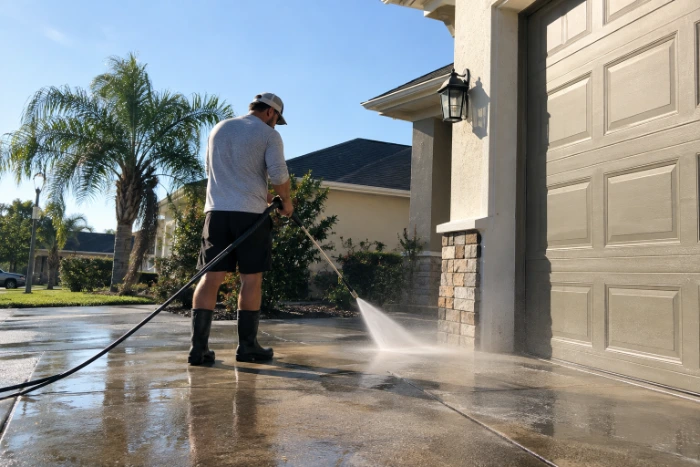
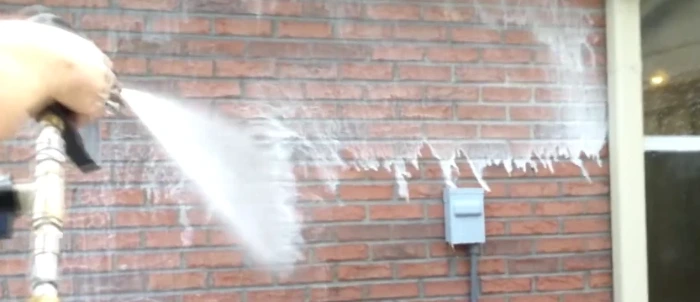
Driveways, walkways, patios, pool decks and pavers. Organic growth, tyre marks, oil and rust each behave differently, and not all of them fully release.
How flatwork cleaning works
Commercial
Storefronts, walkways, dumpster pads and multi family flatwork, scheduled around your trading hours.
Commercial pressure washing
Pressure or soft washing?
Which surfaces can take pressure and which need a low pressure wash, with the manufacturer guidance for each.
Read the comparison
Why it happens here
Why exterior surfaces stain so fast in Jacksonville
Algae and mildew need moisture, and Jacksonville supplies it for most of the year. These are the published federal figures, not sales copy.
53.4in
of rain a year on average, with June to September each above 6.7 inches.
Source: NOAA NCEI, 1991 to 2020 normals
88%
average morning humidity, and it never drops below 85 percent in any month.
Source: NOAA NCEI relative humidity
115days
a year with measurable rain, so walls, roofs and flatwork spend much of the year damp.
Source: NOAA NCEI precipitation days
The black streaks on a shingle roof are Gloeocapsa magma, a blue green algae the asphalt roofing industry links to warm, humid conditions and names as most common in the Gulf States and along the Eastern Seaboard. ARMA. Shaded walls stay damp longest, so growth usually shows there first.
The question to ask first
Can you pressure wash a roof?
No. Not an asphalt shingle roof.
The Asphalt Roofing Manufacturers Association states that a pressure washer should never be used on an asphalt shingle roof, because it causes granule loss and likely premature roof failure. The accepted method is a cleaning solution applied at low pressure, left to dwell, then rinsed at low pressure.
That is the difference between pressure washing and soft washing, and it is the most useful thing to understand before hiring anyone. Pressure washing uses force and suits hard flatwork. Soft washing uses a cleaning solution at low pressure and suits siding, roofs, screen enclosures and painted surfaces. A contractor with one pressure for every surface is the risk.
Read the full comparison, surface by surface or see how roof cleaning works.
Surfaces
Surfaces, and the method each one needs
High pressure is usually appropriate
- Concrete driveways, walkways and sidewalks
- Concrete patios and pool decks
- Brick and concrete pavers, with a wide spray at a low angle so the joint sand stays in (ICPI Tech Spec 5)
- Masonry and brick walls in sound condition
Low pressure or soft wash only
- Vinyl siding and vinyl fencing
- Stucco and painted wood
- Fibre cement board such as Hardie
- Asphalt shingle roofs
- Screen enclosures
Condition changes this. Chalking paint, failing sealant, soft mortar or an older roof can move any surface into the low pressure column. Composite decking depends on the product: Trex allows up to 3,100 psi with a fan tip on its current boards but says its early boards must not be pressure washed. We check before we start, not after.
Process
How it works
Call for a free estimate
Tell us the property and which surfaces are bothering you.
We assess the surfaces
Material, condition, access and water supply all change the job.
Scope and price in writing
Including anything we do not expect to fully remove.
Scheduled around weather
Rain during or straight after a wash affects the result.
Final walk round
If something was missed, we deal with it while we are still there.
Results
Before and after
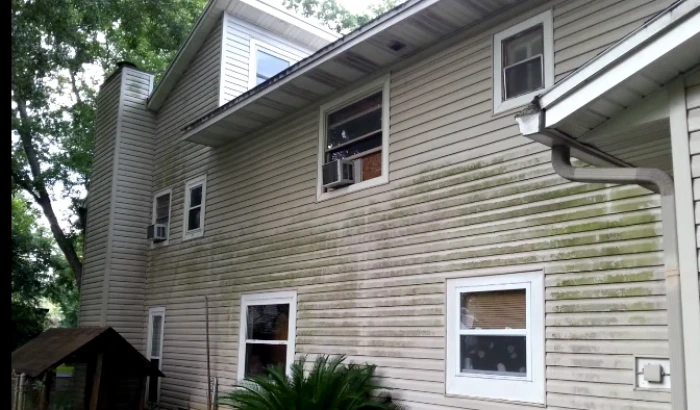
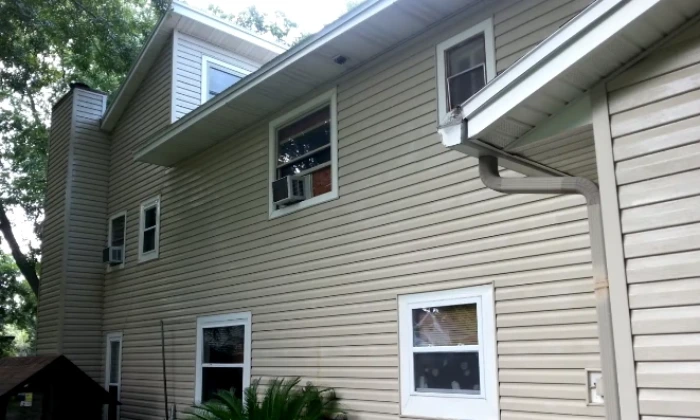
Example before and after photos of lap siding cleaning. They illustrate the method and are not photos of our Jacksonville work, which will replace them as it is photographed.
Service area
Where we work
Jacksonville and Duval County, plus the neighbouring communities below. We name the county for each, because these are separate jurisdictions, not Jacksonville neighbourhoods.
Duval County
- Jacksonville
- Jacksonville Beach
- Neptune Beach
- Atlantic Beach
Jacksonville Beach, Neptune Beach and Atlantic Beach are on the ocean, where salt exposure is a factor.
Clay County
- Orange Park
- Fleming Island
- Middleburg
All three are inland, not on the coast.
St. Johns and Nassau
- Ponte Vedra Beach, St. Johns County
- Yulee, Nassau County
Ponte Vedra Beach is oceanfront. Yulee sits inland of Amelia Island.
FAQ
Questions people actually ask
What does pressure washing cost in Jacksonville?
Published prices are usually per square foot, per home-size band or a minimum charge, then adjusted for what makes the job harder: one storey or two, how advanced the staining is, oil or rust on a driveway, access and water supply. We will not quote a firm price without seeing the property.
Will pressure washing damage my siding?
It can. Siding industry guidance warns that spraying upward forces water behind the panels, and high pressure strips paint that is already chalking. Siding is a low pressure job with a cleaning solution doing the work. Ask any contractor what pressure they intend to use before you book. How we wash siding.
How often does a Jacksonville home need washing?
It depends on exposure more than on the calendar. A shaded wall stays damp longer and usually regrows sooner than a wall in full sun, and tree cover and irrigation overspray shorten the interval further. Rather than quote a fixed schedule, we would rather look at where growth is actually returning on your property.
What happens to my plants and landscaping?
Plants next to the work area are covered or wetted before we start and rinsed afterwards. If there is something you are protective of, point it out at the quote stage and we will plan around it.
Do I need to be home?
Not for the work itself, as long as we can reach the areas being cleaned and an outside tap if we are using your supply. We would rather you were there for the final walk round, so anything you are not happy with gets dealt with before we leave.
How should I prepare before you arrive?
Close windows and doors, move vehicles and anything light or fragile off the surfaces being cleaned, and bring in door mats and cushions. If pets use the yard, keep them inside while we work.
Customer reviews
Reviews from Jacksonville customers will be published here as we receive them, with the customer’s permission. We do not publish reviews we have not been given, and we do not put ratings in our page code that we cannot point to a real source for.